


The light layer
Havbris
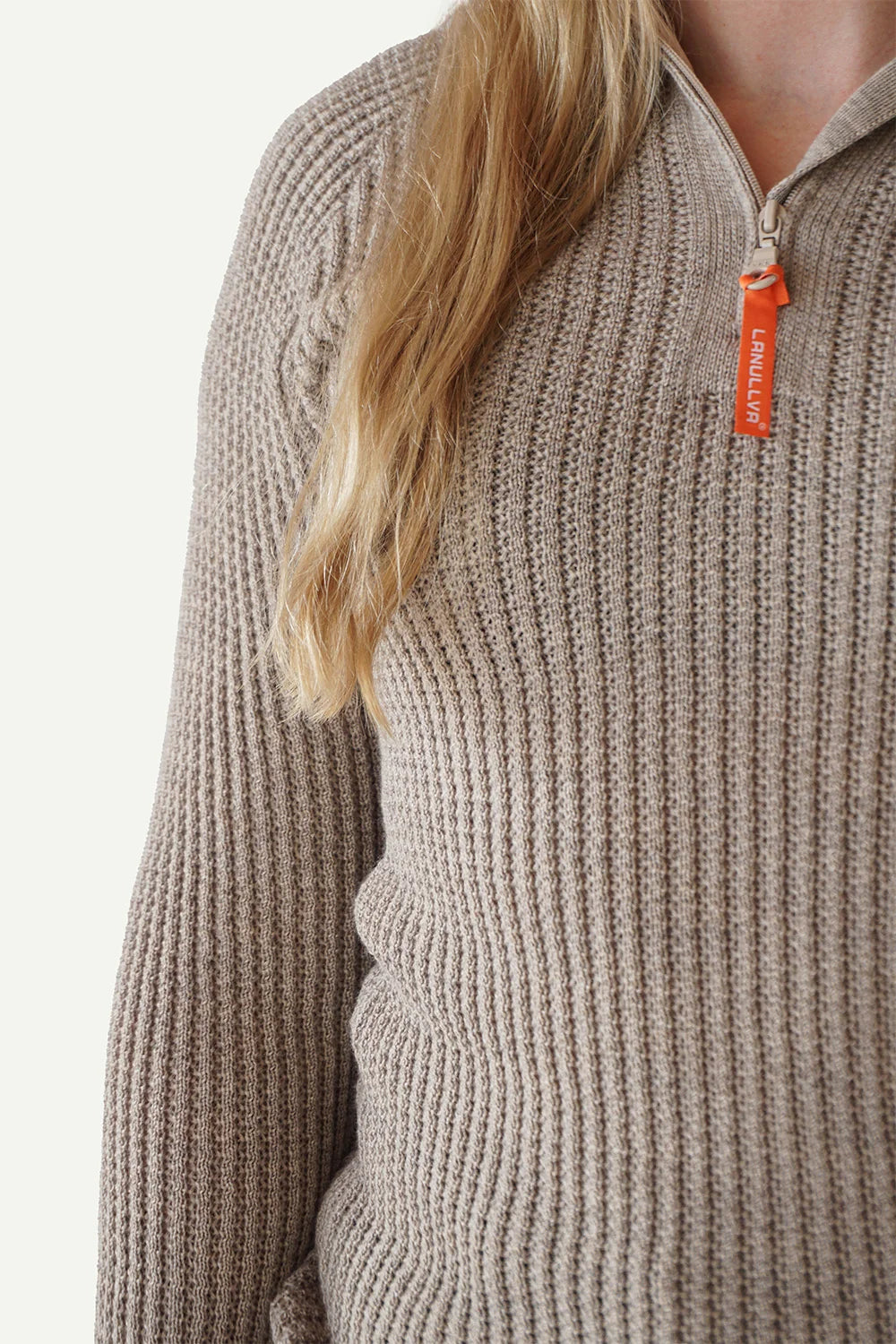
A thin layer with air knitted into every stitch – on its own or next to the skin.
- Knit
- Thin rib knit
- Feel
- Soft, airy and very stretchy
- Use
- Next to the skin on hikes and when active


A little more air. A lot more care.
When Eilif needed a warmer sweater, Brit found a new way to knit. That care lives on in Lanullva.
Five series for different days. Find the one that fits how you use it.
The light layer
A thin layer with air knitted into every stitch – on its own or next to the skin.

The warm layer
A thicker knit with plenty of air – made to keep you warm when you stand still.

Everyday wool
Simple essentials in thin, smooth merino – for work, training and everyday life.

The rugged wool
Knitted in Norwegian wool from farms in Hustadvika. Wear it as a warm layer over other clothes.

For forest and field
Thin wool treated with permethrin – made for forest and field where there are ticks and mosquitoes.

At Lyngstad, on Norway's north-west coast facing the Atlantic, Eilif came home wet and cold from working in the forest and on the farm. Brit knitted him a sweater with extra air in the stitches. That was the beginning of Lanullva in 1994.
Today their daughter Gunn Anne runs the family business together with her children Frank, Svein and Cecilie. We are based by the Atlantic Road, just five kilometres from where it all began – with the same care for the garments and the people who wear them.
Get to know the family
Behind Havbris and Hustadvika lies Brit’s knitting method. Get to know the story, the craft and the distinctive structure of the garments.
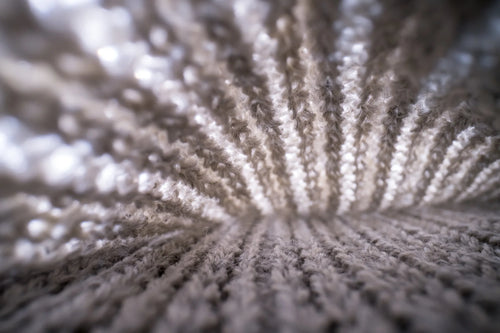
Wool alone isn’t the whole explanation. What insulates is the still air held in the knit – and Brit’s method builds a lot of it in.
 1
2
3
1
2
3
SINTEF described the knit as “a thick and open structure” with “a lot of air between the fibres”.
Your body heat stays in the air pockets, even when you take a break. SINTEF found that the insulation follows the amount of air in the knit.
Wool can absorb a lot of moisture without feeling wet, so you stay warm when you stop after being active.


Wool underwear for jogging is not the same as for office work. We help you choose the right weight and fit for your everyday life.

Along the coast, the weather shifts between sun, wind and drizzle in a single day. Here is how wool handles damp and wind, and how to dress in layers for...